
Introduction
The National and Counties Public Health Emergency Operation Centers were established as a result of the Ebola outbreak in 2014 which claimed the lives of over 3,500 persons including many Health Workers in Liberia. The Public Health Emergency Operations Centers in Liberia have been providing tremendous support in controlling disease outbreaks in the country. Example are: Lassa fever, Measles, Meningitis and other outbreaks that occurred in Liberia and were managed through support of the Public Health Emergency Operations Center (PHEOC) of the Incident Management System. There are Emergency operations centers in all the 15 counties with staff running the operations in case there are disease outbreaks in those counties.
Initially the PHEOCs have been supported by eHealth through the US Center for Disease Control and Prevention since 2014 – June 2018. While the National Public Health Institute of Liberia and Ministry of Health in collaboration with US-CDC signed a Corporative Agreement (CoAg) to support the PHEOCs in Liberia from 2018 – 2020. The Public Health Emergency Operation Centers are currently gaining momentum in the country because the policy makers at both National and County levels understand and have seen the impact of the PHEOC during the emergency/outbreak response.
Key Objectives
Considering the significance of PHEOC in the public health emergency management program, it was established to:
- Make timely decision on specific events and operations using the best available information, policy, technical advice and plans.
- Collect, collate analyze, present and utilize of event data and information
- Ensure acquisition and deployment of resources, including surge capacity services and material to support all PHEOC functions
- Prepare public communication and coordination with response partners to support audience awareness, outreach and social mobilization
- Ensure the monitoring of financial commitments and providing administrative services for the PHEOC.
- Consistently follow-up with requisite pillars and organizations to ensure the effective implementation of activities
- Coordinate partners’ activities during an outbreak
- Ensure the coordination Incident Management Systems for any Emergency response
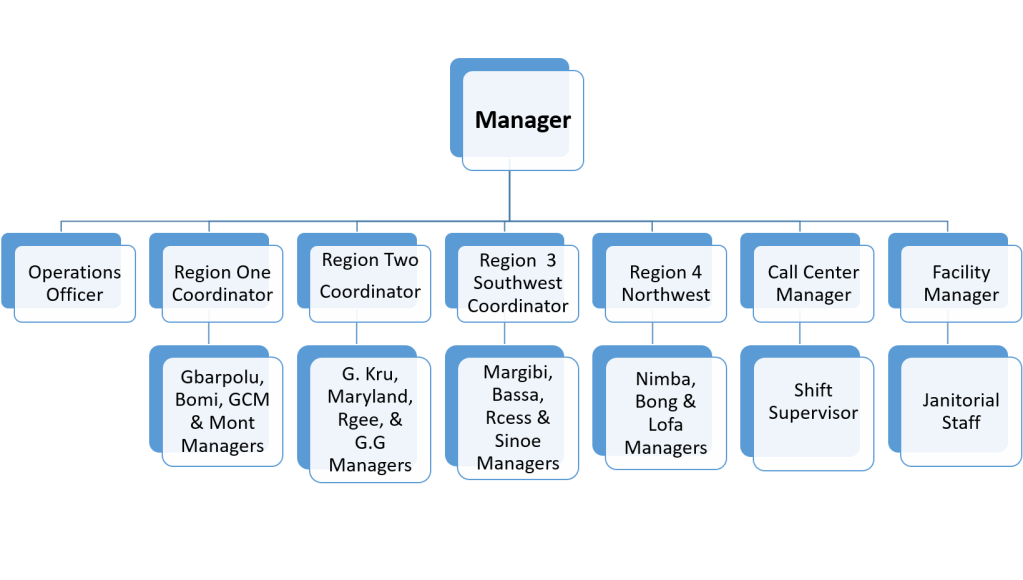
Organogram
Liberia has 15 County level Emergency Operation Centers, this indicates that PHEOC is established in each county. Each PHEOC at the subnational level has 2 trained dedicated staff. While national PHEOC has over 10 trained dedicated staff. The PHEOC staff are trained in Public Health Emergency Management (PHEM) basic and intermediate course. The staff have the capacity to response to any public health threat and since the establishment of PHEOC, the EOCs have managed and control over 80 public health threats with no public panic. The PHEOC all also trained County Health Officers, Surveillance Officers, Diagnostic Officers, Community Health Department Directors and some International Organizations.
Moreover, the PHEOC had conducted 2 functional, 1 Tabletop and 2 full Scale Exercises at the national and subnational levels. The exercises help to strengthen the public health emergency management program in Liberia.
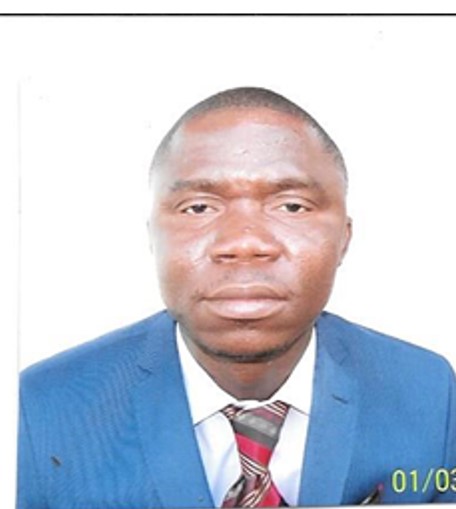
Abraham W. Nyenswah, B.Th, MPH, MSc
Manager, Liberia National Public Health Emergency Operation Center
He is a successful Public Health Emergency Management Specialist with over 10 years’ experience implementing Public Health Emergency Management Programs. He successfully led the coordination of Ebola Epidemic in Liberia with profound experience in the establishment of 16 Public Health Emergency Operation Centers (PHEOC) in Liberia and other countries in Africa. Nyenswah successfully served as WHO International Consultant in Zambia, Eswatini, Ethiopia, Namibia, etc where he helped with the establishment and operationalization of Zambia, Eswatini and Liberia PHEOCs. He has been Incident Manager for the Incident Management System for various infectious diseases outbreaks such as Lassa fever, Meningitis, Measles, etc over the past 7 years. He helped with the development of PHEOC Handbook, Legal Framework, preparedness plans, Standard Operating Procedures, Guidelines, Training Manual, etc in the Kingdom of Eswatini, Zambia, Liberia and other Countries. He further organized the establishment of Public health emergency management program and system in resource constraints countries like The Kingdom of Eswatini, Liberia and Zambia. He organized the first implementation of Public Health Emergency Management Exercises (Tabletop, Drill, Functional and Full Scale) and the first Public Health Emergency Management Training in Zambia Liberia and Eswatini. He organized the Steering committee and Policy group to mobilize resource to support the PHEOC and built the capacity of Africa Emergency Managers in Public Health Emergency Management in Addis Ababa, Ethiopia. While consulting for WHO in The Kingdom of Eswatini, he led in the development of the Initial Incident Action Plan, Operationalize PHEOC, developed PHEOC Handbook, strengthened IMS coordination, led the orientation of IMS pillar leads and Incident Managers on Public Health Emergency Management. He currently coordinates the Liberia COVID-19 Incident Management System which has experienced early decline of COVID-19 cases in Liberia
 National PHEOC Liberia